
HealthPopuli.com Health/Care is Everywhere
- A Healthcare Blue Wave? What the U.S. 2026 Midterm Elections Revealed
 by Jane Sarasohn-Kahn on 04.11.2026 at 21:56
MINA Medical Marketing, an agency based in Canada, recently asked the question, “Why are most health care marketing logos blue?” “In healthcare, blue is a color that evokes feelings of trust, reliability, calmness, and professionalism, all attributes that are essential in healthcare,” Team MINA explained. “Patients need to feel that they are in safe hands, that the care they receive is trustworthy, and that their healthcare providers are knowledgeable and competent.” And blue, the color psychologists attest, communicates these qualities. Today political analysts describe the results of the U.S. 2026 midterm elections as a Blue Wave or a Blue Tsunami, quantifying Democratic candidates up-and-down ballots for Senate, House, State, and local positions generally blowing out those running on the Republican tickets, nationwide. In today’s blog, I’m thinking through the results of the 2026 midterms through the lens of health care, health reform, public health, and the successful candidates who have health care credentials: namely, doctors and nurses. First consider the political “blue brand” of Democrats compared with Republicans on the issue of managing the cost of health care in the U.S. On the trust-front, nearly two-times the number of U.S. voters trusted Democrats over Republicans on doing a better job handling the cost of care, based on KFF’s (Kaiser Family Foundation’s) September 2026 Health Tracking Poll. In my recent post discussing that poll on Gas ‘N Healthcare ‘N Voting here in Health Populi. Healthcare garnered a top priority among registered Democrat voters in Gallup’s October poll, closely followed by income and wealth distribution and the economy, writ large. Leading up to the 2026 midterms, it became clear that health care costs were bundled, in U.S. voters’ minds and wallets, as a key affordability and equity issue. It’s important to note, in terms of voters’ health care priorities and values, that abortion was extremely important to about 1 in 2 Democrats, as shown in the line chart. On the policy front, we know right now based on reporting from PBS that House Democrats are working on a “first 100-days agenda” that will lay out key priorities, a political to-do list if you will, to address voters’ personal priorities and challenges with affordability and corruption. As Hakim Jeffries, who will assume the House Leadership position when the next Congress convenes in 2027, explained, “Fighting for an affordable America — that’s what unites Democrats all across the country.” Some of the key health care political to-dos could focus on the following issues where Americans’ health care challenges have worsened in the past 24 months: For Americans facing the loss of Affordable Care Act health insurance plans, Democrats may take on reinstating ACA tax subsidies to enable newly uninsured health citizens to re-gain their insured status Address cuts made to Medicaid programs, which have left those previously covered by the program to be uninsured, or under-covered — this has impacted families and notably children with access to care Lower prescription drug costs, which in President Trump V 1.0 were a top priority he discussed with TIME magazine in an interview as the magazine’s “Man of the Year.” I wrote about this here in Health Populi in December 2016 (think: nearly 10 years ago!) following the publication of that TIME interview, when President Trump was quoted saying, “I’m going to bring down drug prices. I don’t like what’s happened with drug prices,” critiquing the pharmaceutical drug industry saying that drugmakers are “getting away with murder.” Improve Medicare payments to physicians, to reverse CMS’s proposed 1%+ physician payment cut and limiting payments for certain other services. Convene oversight sessions looking into health insurers’ prior authorization practices and surprising billing procedures fixing the No Surprises Act. At the State level, we always expect Governors to address health care services and access, and we heard from a few candidates who won their elections in these midterms about Medicaid expansion. Keisha Lance Bottom, who will assume Georgia’s top state post, has advocated for Medicaid expansion, which as a governor she could endeavor to do – dependent on Federal funding and support for the initiative. Dr. Amy Acton, a physician who will assume Ohio’s Governor position in 2027 — who will become the first woman physician to serve as Governor in U.S. history — also wants to assure Medicaid expansion, as well as address prescription drug costs and medical debt. One of her proposals on the campaign was to create a Medicaid pharmacy benefit management platform (“OhioRx”) for the state of Ohio and its health citizens. Dr. Annie Andrews, a pediatrician, is Senator Elect from South Carolina, beating out her opponent Darline Graham, long-time Senator Lindsay Graham’s sister. Dr. Andrews, like Dr. Acton, featured health care issues in her legislative priorities, seen on her campaign site: #1 is, “Healthcare is a right, not a privilege.” None of this will be easy, even with Democratic majorities in the House and Senate, given that President Trump warned he could take on the persona of “Mr. Veto” which he discussed on Fox News — that is, never signing into legislation the health care proposals brought to the DESK in the Oval Office. “Democrats will face a health care stress test,” Adriel Bettelheim wrote in Axios on the coming 24-months of legislative tussles Dem’s health care policies could confront. Health Populi’s Hot Points: Finally, under the banner of “difficult to do in the short term” we heard the phrase “Medicare for All” used by several candidates in the 2026 midterms, Most notably and consistently, Dr. Abdul El-Sayed of Michigan put M4A as a centerpiece of his run. Dr. El-Sayed won the state’s Senate race, bolstered by superb “political athleticism” and consistent messaging about affordability — as illustrated by the sign from one of his rallies: “Money out of politics, Money in your pocket.” Troy Jackson, who successfully beat out Susan Collins, 30-year veteran of the Senate, replacing her as Maine’s new Senator, has also featured universal health care in his stump speeches, an attractive prospect for workers in Maine who have lost their health insurance and facing rural hospital shutdowns and access challenges. We know health care, costs, access, and equity were motivations for many health citizens voting in the 2026 midterm elections. Once the Democratic majorities take their seats in Congress, impatient patients in the U.S. will expect health care costs and related issues to be front of mind and action for these newly-elected legislators. Will the Blue Wave devolve into a case of The Blues for U.S. health citizens? For the public’s health, we hope that won’t be the case. The post A Healthcare Blue Wave? What the U.S. 2026 Midterm Elections Revealed appeared first on HealthPopuli.com.
- The State of Health Insurance in the U.S. Leading Up to the 2026 Midterm Elections: Healthcare Costs Play Into Voters’ Views on Affordability
 by Jane Sarasohn-Kahn on 29.10.2026 at 18:24
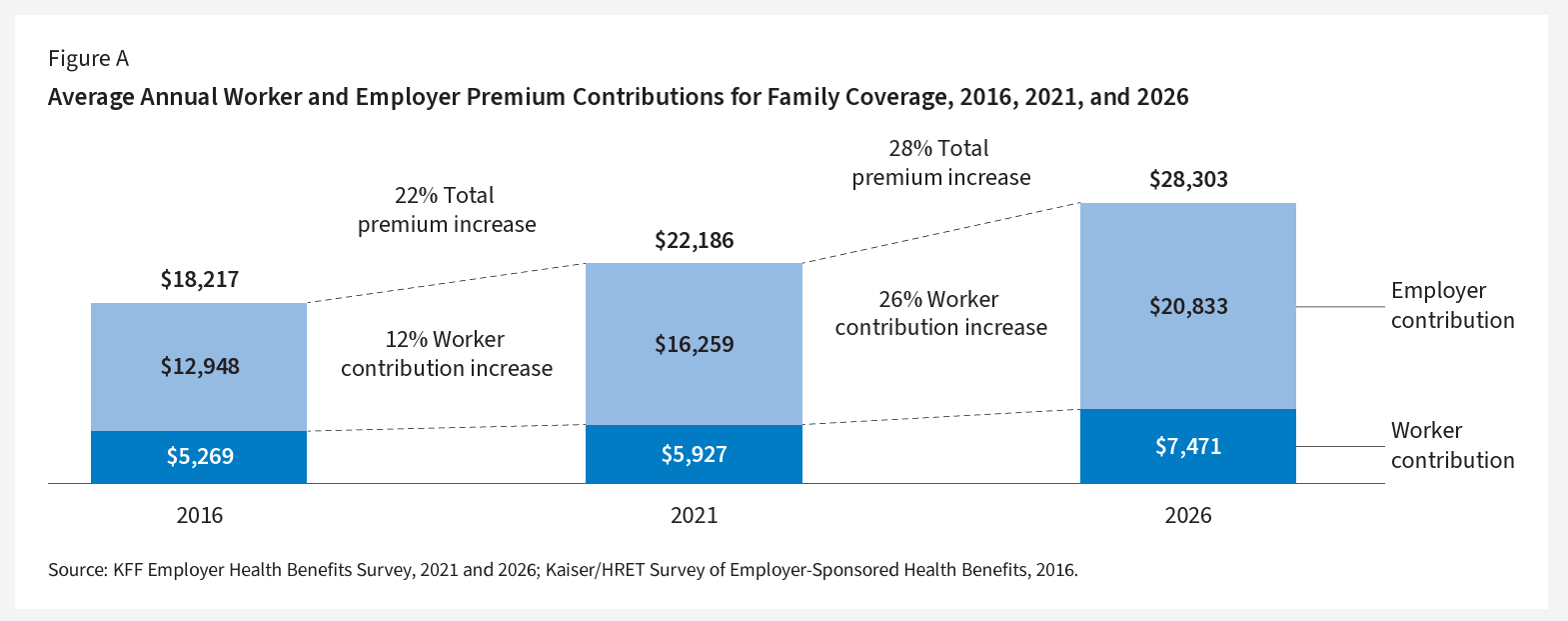
The U.S. kitchen table has been host to American consumers’ challenging budgets for the persistently higher costs of food at the grocery store, petrol at the gas station pump, interest rates for houses and expensive durable goods like cars, and healthcare. U.S. adults’ ability to afford healthcare was at a five-year low, a Gallup-West Health poll alerted earlier this year in June. [The methodology calculated that only one-half of Americans felt “cost secure” for healthcare]. TIME magazine, writing from a mass/popular media point of view, wrote that, “Health care costs are becoming unsustainable.” Providing evidence for TIME‘s assertion, several reports published this month focus us on the evidence-base for growing health insurance costs and how much medical cost-sharing is impacting U.S. consumers and their families. We learn from the annual Kaiser Family Foundation (KFF) Employer Health Benefits for 2026, The Commonwealth Fund’s report on The State of Health Insurance Coverage in 2026, and The 2026 People’s Health Care Survey from the United States of Care. Top-line, employers’ premium costs topped $28,000 to cover a family in 2026, KFF reported. About two-thirds of this premium were covered by companies, and about one-third (nearly $7,500) were attributed to worker contributions for their families’ health insurance. See in the first chart that the worker contribution increased by 26% from 2021. This second chart attests to that employer response to the growth of health plan costs, with the intent to increase the share of premium that employees contribute. 44% of companies sponsoring health insurance planned to do so. In addition, one-fifth of companies would also increase deductibles or cost-sharing for most services. As insured Americans take on more health care financial burden, the question of affordability is compounded by a higher-cost consumer goods environment and flattening wages: the line chart, Figure B from KFF’s report, clearly illustrates the gap or “bite” between the cost increases for family premiums and workers’ earnings in 2026. The Commonwealth Fund’s read on the state of health insurance in the U.S. calls out what consumers said was the most important problem in U.S. health care: not finding a doctor or getting an appointment, and not so much prior authorization (which together are 2 factors that contribute to access challenges). It’s the cost of premiums for health insurance and then the cost of what the health plan member pays for care and prescriptions that together 78% of Americans say are the biggest problems in American health care in 2026 to be improved. Significantly, these two cost problems were cited fairly equally by Republicans, Democrats, and Independents in the U.S., the Commonwealth Fund illustrated in this bar chart. There would be few other issues with which the three partisans in America would concur in this moment of political schism and separation. Health Populi’s Hot Points: US of Care’s People’s Health Care Survey revealed that 3 in 4 Americans said health care would be a top 3 voting issue for them; that they support a stronger role for government to make care affordable and available; and, that they feel frustrated, overwhelmed, or helpless about health care costs. Nearly one-half of U.S. consumers also told US of Care that people wanted major or “radical” change in the nation’s health care system. FYI US of Care conducted this consumer survey in June and July 2026 among 2,732 U.S. adults m collaboration with ZS Associates. “Voters’ concerns about health care costs are having a moment, and will continue to do so through 2028, because voters see them as a dimension of their worries about the cost of living, which is their dominant concern right now,” Drew Altman, Founding President and CEO of KFF, wrote in A Guide to the Role of Health in the Midterms, earlier this month. What Americans want from health care, US of Care found, fall under four pillars of priority: Affordable health care Dependable coverage as life changes and emergencies occur Personalized health care, tailored to peoples’ needs; and, An understandable system that is easy to navigate. “People want action, not gridlock,” US of Care summarized. “Health care is not working for most people in this country,” the report crystallizes. Gallup reported today that American voters’ top 3 issues as they go to the polls on 3rd November are the economy, healthcare, and the Iran War. Below these 3 key personal motivations of importance for voting come two other cost- and economic-related challenges: income and wealth distribution (66% important NET), and gas prices (72% important NET). A consistent theme and concurrence between the Commonwealth Fund and US of Care surveys was that most Americans are looking to “government” to help solve the pretty universal challenges of health care affordability and availability (which addresses access and equity). This sentiment crosses political party ID. We’ll soon find out whether the Democrats current 9-point leadership in health care, discussed by Ipsos in a poll conducted last week, will translate into votes for health care reform, broadly defined, in the 2026 mid-terms. The post The State of Health Insurance in the U.S. Leading Up to the 2026 Midterm Elections: Healthcare Costs Play Into Voters’ Views on Affordability appeared first on HealthPopuli.com.
- Stress Is the New Normal for Americans in 2026 – Listening to the American Psychological Association
 by Jane Sarasohn-Kahn on 26.10.2026 at 05:15
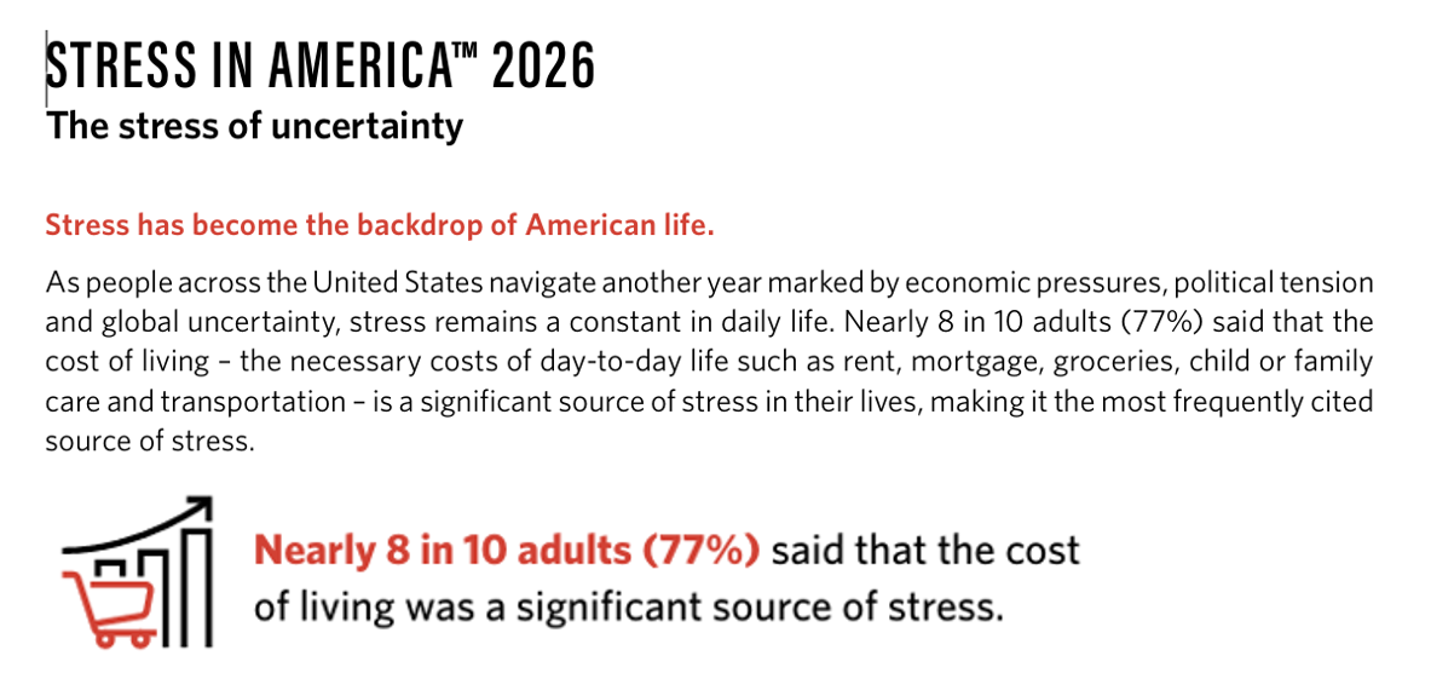
Three in four people in the U.S. say that “stress is just something I have to live with,” and that, “Bad news no longer shocks me the way it used to.” Welcome to the New Normal for people in America: Stress for All (or most), quantified and detailed in Stress in America 2026: The Stress of Uncertainty from the American Psychological Association. Two in three people also say they have become accustomed to living with uncertainty. The APA conducted research online in July-August 2026 among 3,132 adults 18 years of age and over with The Harris Poll to assess peoples’ perspectives on stress. APA has conducted the Stress in America survey for many years; I’ve covered this study perennially in the Health Populi blog, with links below the Hot Points). People feel stressed by many factors in daily life: in the APA poll, most Americans cited every one of the stress-items surveyed in the study, with 3 in 4 noting the cost of living, the economy, the future of the nation, and money — thus, three of the four most-cited stress factors had to do with financial matters. But even the lowest-mentioned stressor, global tension and conflict, got 56% of consumers noting that source of stress, so geopolitics are also stressful for most people in America in late summer 2026. See that 3 in 5 U.S. consumers say health care is a significant source of stress: for sandwich caregivers, that spikes up to 82%. a challenge duly noted and attended to by my colleague and friend, Alexandra Drane in her work with ARCHANGELS. (Check out her latest TEDx Talk here on, Sex, Drugs, and… Caregiving?) There are some social and mental health issues that consumers are dealing with caused by the stress they are feeling. For example, one-half of U.S. adults are withdrawing from social participation due to stress, such as 37% pulling back from social activities or gatherings, 27% reducing participation in hobbies or activities they had previously enjoyed, and 16% reducing participation in community activities. The coping mechanism for replacing connection could be AI — with 49% of U.S. adults using AI to engage in conversations as a friend, 49% using AI to discuss relationships, and 47% using AI to act as a mental health professional. These behaviors are more commonly adopted by younger people 18-29 years of age compared with those over 30. Health Populi’s Hot Points: For more insights into APA’s Stress in America research, you can read my past years’ takes on this always-informative, insightful research: 2024 – America in a World of Turmoil 2023 – Everyone Is Stressed in America 2022 – Mental Health Risks in 2022 2021 – Stress in America, One Year Into the Pandemic 2020 – Stressed Out by COVID-19 and Civil Unrest The post Stress Is the New Normal for Americans in 2026 – Listening to the American Psychological Association appeared first on HealthPopuli.com.
- Gas ‘N Healthcare ‘N Voting in November 2026: A Last Pre-Midterms Snapshot on Health Politics on Main Street USA
 by Jane Sarasohn-Kahn on 22.10.2026 at 05:15
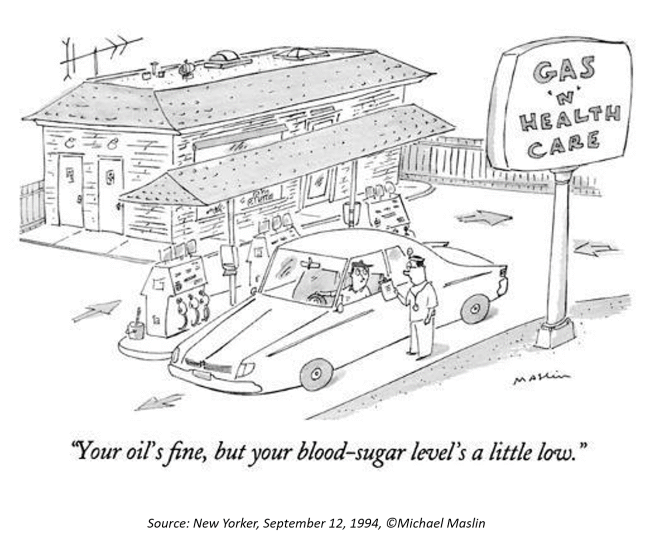
Trust has been eroding between U.S. health citizens and the key stakeholder touchpoints that are meant to serve patients in America — whether health insurance plans, hospitals, providers, pharma and med-tech companies, and increasingly technology purveyors such as EHR platforms (most prominently, Epic) and AI for self-care information support. Some of the trust-eroding factors underpinning Americans’ growing sense of healthcare grievance are increased denials via prior authorization processes, cuts in health care access (such as Medicaid cuts, discussed in this POLITICO analysis), and increasing out-of-pocket spending coupled with low and unsatisfactory levels of expected customer service and lack of personalization and empathy (see Qualtrics on this phenomenon). It’s the double-barreled issues of spending and care access that’s really gotten into U.S. voters’ hearts and heads in advance of the 2026 mid-term elections. I began to embed this cartoon in my health care consulting client meetings since writing my first blog post here in Health Populi in September 2007. The title of that post was, “Health Care is the #1 Line Item in Our National Economy…and Taking More Out of Our Pockets.” When Michael Maslin conceived this New Yorker cartoon in 1994, the U.S. allocated 13.7% of the nation’s GDP to health care — about $949 billion. But the cartoon was timely 32 years ago, and even more relevant in 2026, as the U.S. spend on health care is nearly $6 trillion comprising nearly 19% of the nation’s economy. s It’s déjà vu all over again, as the Kaiser Family Foundation (KFF) Health Tracking Poll conducted in late September 2026 (published October 6) found that most Americans just a few weeks before the midterm elections are worried about their ability to afford health care, gasoline (and transportation costs), food and groceries, and utilities (largely driven by the price of oil and energy). “It’s affordability, stupid,” if we want to sum up where U.S. health citizens are as they engage more in civic society appearing more motivated to vote in the coming election than in the previous one — more likely Democrats’ enthusiasm versus Republicans’ lower levels of voting inspiration. Overall, nearly one-half of Americans are keener to voter this midterm election. The KFF Poll concurs with the Pew Research Group finding that Democrats appear to be more motivated to vote this time around compared with Independent and Republican voters. Nearly 2 in 3 Democrats feel more motivated to voter versus roughly 3 in 5 Independents and Republicans, the bar chart illustrates. ‘ It’s Democrats who more U.S. voters trust to deal with the cost of health care, the KFF Poll learned, as well as Dems having an edge on handling peoples’ cost of living. Note that “health care” in the KFF Poll includes the cost of health insurance along with consumers’ out-of-pocket spending for office visits and prescription drugs. Health Populi’s Hot Points: “The U.S. Health Economy Is a Tragedy of the Commons,” Trilliant Health introduced its recent annual report on the trends shaping American health care. We can track the earliest origins of the theory of the Tragedy of the Commons back to Aristotle, who in Politics wrote, “That which is common to the greatest number has the least care bestowed upon it. Every one thinks chiefly of his own, hardly at all of the common interest; and only when he is himself concerned as an individual.” As Trilliant sees health care in 2026, the Tragedy of the Commons for American healthcare is the lack of system-ness, population un-wellness, market failure, inconsistent value, fraud/waste/abuse, and the negative-sum game that industry stakeholders play: think health insurance, hospitals, providers, pharma — the major cost line-items in U.S. medical care. “The question for every American,” Trilliant poses, “is whether the commons that is the U.S. health economy is past the point of recovery.” As the KFF Tracking Poll leading up to the 2026 midterm elections points out, 85% of U.S. voters say major changes in health care are needed — with over 1 in 3 believing the system needs to be completely overhauled. With affordability driving people to vote on the basis of health care, gas and transportation, food and groceries, utilities and housing, the prospect of a national health plan looms more rational than it has since the advent of Medicare and the Great Society of LBJ. The post Gas ‘N Healthcare ‘N Voting in November 2026: A Last Pre-Midterms Snapshot on Health Politics on Main Street USA appeared first on HealthPopuli.com.
- Food As the Universal Prescription for Health with the Grocer in the Health/Care Ecosystem – Learning from Ahold Delhaize
 by Jane Sarasohn-Kahn on 19.10.2026 at 13:12
92% of consumers, globally, want to change their diet to be healthier; 8 in 10 global health citizens are actively trying to be healthier. But these health-intentioned people share challenges and frustrations in meeting these well-intentioned goals. Having spent the last month of living and working in 4 cities in Europe, I’ve had the opportunity to experience many dimensions of health and medical care in four European countries. One universal truth in the “I-know-what-I-know” category of evidence-based health is that (good) food bolsters, sustains, and assures health for individuals, families, communities, and nations. I saw evidence of this in conversations and work situations throughout my Euro-month in Italy, the Netherlands, Belgium, and the United Kingdom. These experiences and data points have been, serendipitously timing-wise, captured in a report published by Ahold-Delhaize, the food chain which operates grocery stores in Europe and the United States. My personal case study-experience, which I’ve written about here in Health Populi, has been with the small-format urban grocer Proxy (Toison D’Or location) in Brussels located in my old neighborhood of St. Gilles in Brussels, Belgium,. This is where I shopped for groceries earlier this month while in Brussels (and during my time living in Brussels during the COVID and after-pandemic-era). My first entry through the Proxy front door was akin to meeting up with an old trusted friend as I am a dedicated home cook who loves to hunt-and-gather fresh and locally-sourced food. To bolster their understanding of consumers, health, and food, Ahold Delhaize collaborated with GlobeScan and the Consumer Goods Forum to conduct consumer research between February and March 2026 in seven national markets in which the company operates supermarkets: Belgium. the Czech Republic, Greece, the Netherlands, Romania, Serbia, and the U.S (oversampling here to reflect the large population and regional differences across the country). The results of this study were published this month in the report, Collaborating for a healthier future: retail’s role in a healthier food system. Ahold Delhaize served up the implications and key themes emerging from the research: Closing the intention-action gap on healthier eating, especially the opportunity to create environments that support healthy choices Layering solutions which combine interventions that together maximize impact Scaling what works through collaboration by implementing multiple approaches driving changed at-scale Considering products, meals, and lifestyles to support healthier eating patterns through everyday habits and routines, and, Dealing with the role of AI in healthier diets, exploring the potential for trusted, personalized nutrition support. The research found that consumers, globally, face three key challenges when it comes to healthier eating: the affordability issue, where healthier food options compete with other household spending costs; facing complicated decisions about healthier food where consumers questions about the information on nutrition and food-for-health; and, a lack of personalization when considering healthier food options – not fitting, “the way I eat, drink and live,” in the words of the study. How to address these challenges? Ahold Delhaize recommends closing the gap between consumers’ healthier intentions versus making the healthier choices by making the decisions evidence-based via, Affordability. Ease in decision making, and Making offerings more relevant and personalized to peoples’ lifestyle and values. There is a solid ROI for food retailers who endeavor to close the gaps between consumer intent and purchase of healthier foods: the bar chart details options retailers could implement to attract consumers’ greater engagement in healthier food spending: most impactful, globally, would be making healthier options more affordable, offering a greater array of fresh fruit and veg, suggesting healthy meals making up recipe ingredients in “one-click,” and making it easy to search and filter online by health and dietary needs — both a personalization and ease/convenience tactic. Health Populi’s Hot Points: Ahold Delhaize’s call-to-action emphasizes keeping the consumer at the center of all the company does….”embedding healthier choices into the rhythms of everyday life….” Such a focus on health, of the individual, for the community, and for national markets, requires collaboration: making health is a team sport. Check out the company’s concluding recommendations on how to design healthier choices through a pragmatic lens of “what works.” The collabs for this audacious (and laudable!) goal address roles across the health/care stakeholder ecosystem, including food manufacturers, policymakers, health experts (it’s the evidence-base that counts), farmers’ cooperation, consumers themselves for self-care focusing on healthier habits — and a civil society. As consumers around the world gain more sense of self-agency for acting on their health and well-being — many taking on greater out-of-pocket costs for medical care. insurance, and prescription drugs — health care looks increasingly “retail,” and so the retail health ecosystem has the opportunity to meet people and their personal “rhythms” to partner in co-making health and well-being with individuals, communities, and indeed the public’s health. This report and the research informing it represents the best current view of how large grocery chains and commercial food channels can be relevant and impactful on helping build a healthier world, one health citizen at a time, at scale. The post Food As the Universal Prescription for Health with the Grocer in the Health/Care Ecosystem – Learning from Ahold Delhaize appeared first on HealthPopuli.com.
- Health for Everyone, Everyone for Health – Meeting Dr. Max Pharmacy in Italy
 by Jane Sarasohn-Kahn on 23.09.2026 at 07:54
“La salute per tutti, tutto per la salute.” That’s “Health for everyone, everyone for health.” It took me to get to Italy to find my longtime mantra for work and life expressed by a European pharmacy chain, the Dr. Max Group. I’m in Florence, Italy this week, celebrating my husband’s and my 40th wedding anniversary – feeling blessed and well in all forms, mind, body, and spirit. So it’s a propitious moment to meet the Dr. Max pharmacy company, which is fast-growing in Italy beyond its roots in eastern Europe. Currently, the organization’s pharmacies span 18 countries. And while I’m here in Florence, I found a Dr. Max pharmacy 3 km from where we are in the Oltrarno. The vibe of the pharmacy-retail store experience is a convergence of a U.S. consumer’s Ulta-meets-CVS pharmacy-meets-Capital One Cafe. My timing is serendipitous becausethe company is implementing a program called Forever20 which is bringing health-and-longevity-on-wheels to health citizens throughout Italy. The effort runs from September 2 to October 6, 2026. “The campaign aims to promote a healthy and active lifestyle through an ecosystem of initiatives dedicated to prevention , wellness , and exercise,” Dr. Max’s press release explains (in the English translation from Italian). “The project aims to maintain a high level of awareness on the topic of prevention, making it accessible to all, with the idea that this includes behaviors, check-ups, and monitoring activities that help identify the main risk factors early and promote more informed choices. The campaign focuses on holistic well-being, promoting paths to regaining balance and quality of life.” The mobile health services address a range of conditions and prevention, including cardiovascular health (think ECG, Holter monitors, blood pressure), along with longevity and aging assessments, and exercise/activity promotion where consumers can participate in daily challenges via Health Walks. “Making prevention accessible means bringing it ever closer to people, in the places and moments of their everyday lives,” Dr. Max’s Chief Marketing & Customer Officer Francesco Ghibaudo, said about Forever20. That sounds a lot like, “health happens where we live, work, play, pray, and learn,” the adage often used by U.S. public health advocates (like me). As I’ve discussed in my books HealthConsuming and Health Citizenship, health care in our time is increasingly morphing into “retail health,” with health citizens taking on greater self-care and agency for their own health. So it is with Forever20 and Dr. Max’s overall mission: “By bringing informational activities and engagement opportunities to the local community, the chain underscores its commitment to making prevention increasingly accessible, moving it beyond traditional healthcare settings and integrating it into everyday life…Today, the pharmacy is much more than a place to find a product or receive a solution to an immediate health need. It is a local health facility that supports people in their daily self-care, becoming an increasingly important point of reference not only for health, but also for well-being and prevention. We believe that the future of the pharmacy is to be a place where citizens can find a listening ear, qualified advice, services, and concrete tools to take care of their health in an informed and continuous manner….capable of promoting healthy lifestyles and spreading a culture of prevention accessible to all.” Health Populi’s Hot Points: In pondering this post, I’m reminded of a prototypical quote from America’s early days, “Go West, Young Man.” Well, I’ve looked (and traveled) eastward, and I’ve found a True North in the ethos of the Dr. Max group. It is wonderful to see self-care and consumers’ health engagement for wellness and longevity growing around the world….individual health bolsters community health, and at scale public health globally. The messages of respect, partnership between pharmacist and health citizen, and education are universal, and the Dr. Max organization and the company’s staff exemplify this. Stay tuned to Health Populi over the next few weeks as I share more health-findings and -learnings from Amsterdam, Brussels, and London…. The post Health for Everyone, Everyone for Health – Meeting Dr. Max Pharmacy in Italy appeared first on HealthPopuli.com.
- One in Two Americans Who Have Used AI Believe They Can Address Health Concerns At Least As Well As Health Care Providers – The 2026 Edelman Trust Barometer Look at AI, Health Care, and Trust
 by Jane Sarasohn-Kahn on 16.09.2026 at 05:12
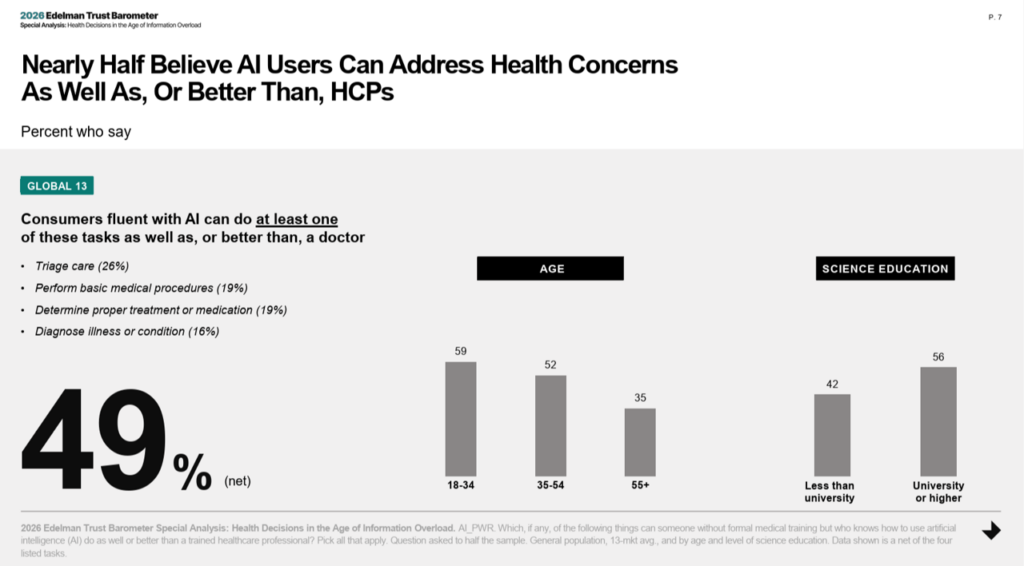
Consumers have placed their personal physicians above all health care touchpoints in their lives when it comes to trust stewards of and for health care information and data protection. More consumers have adopted the use of AI in every day life across many life flows, including their health care. The latest riff from the annual Edelman Trust Barometer 2026 highlights a look into health and trust in concert with the Yale School of Public Health. And they found that among AI users, one-half think AI can address their health concerns at least as well as doctors can. To gain global health citizens’ perspectives on trust, health, and AI, the Edelman team polled 12,998 adults in 13 countries between late February and mid-March 2026. Countries covered included Australia, Brazil, Canada, France, Germany, India, Indonesia, Japan, Mexico, S. Africa, S. Korea, the UK and the United States. The first chart reveals that 1-in-2 AI users’ views on using the technology for health concerns in general. However, more granularly, consumers believe AI can handle particular tasks at least as well as a doctor such as 19% who cite triage care (that is, to assess whether and when they need to seek further medical advice), 19% to perform basic medical procedures or determine proper treatment or medication, and 16% to diagnose an illness or condition. The younger the population, the more likely health citizens are to feel AI can accomplish these health tasks at least as well as a doctor — believed by 59% of those 18 to 34 years of age compared with only 35% of people 55 and over. Formal education also makes a difference in this perspective, with 56% of those with at least a university education believing AI for health concerns can be at least as good as a physician compared with 42% of those with less than a university education. Looking more deeply into the categories consumers deal with for their personal health decisions, the data also revealed that people more highly value their health care provider’s (HCP’s) source of truth for diagnoses, long-term treatments, and disease prevention than for diet and nutrition, and wellness and longevity. For these latter two areas of health decisions, global health citizens more favorably see uncredentialed sources compared with licensed physicians. Those uncredentialed sources include artificial intelligence (AI), creators without medical training (think: Tik-Top influencers without an MD or RN after their name), family and friends, people they know who have similar health conditions (such as Susannah Fox’s community of peer-to-peer health care), and spiritual leaders. Health Populi’s Hot Points: People are turning to AI in health care for a range of reasons: in the work I do at the intersection of consumers, technology, home economics, and health, more folks are likely to adopt AI for values of convenience, immediacy, attention, agency, access, and costs — which can be time costs, medical bill costs, and psychological stressors of disease taboos (say, for mental health, sextually transmitted diseases, gender, among others). Some of the Edelman data in this round of reporting and analysis points to the consumer’s perception of whether the information source — focusing on the physician here — showing they are “listening actively” and “understanding my situation.” Over one-half of the global health citizens Edelman polled said that if a medical expert or HCP wanted me to follow a recommendation about which I had doubts, it would be important for them to, Listen first to make sure they understand me and my life situation; Welcome my doubts and address them patiently and without judgment; and, Acknowledge, validate, and help me work through my concerns. In my work teaching health care corporate executives and client teams on engaging with patients, caregivers, and retail health consumers, I’ve been citing this slide from a recent Qualtrics report on the omnichannel customer experience. I love this statement because it reflects what the 2026 Edelman Trust data reveals in the previous graphic: that “omnichannel = being understood” in the customer journey. In this case, the customer is the patient who yearns to be heard, valued, and understood. As we all continue in our journeys adopting and using AI for work and living our lives, we are the humans in this loop who need to stay engaged — and to demand relevance and empathy from those with whom we interact for our full lives — at work, in our communities, in our families, and to be sure, in our health care. The post One in Two Americans Who Have Used AI Believe They Can Address Health Concerns At Least As Well As Health Care Providers – The 2026 Edelman Trust Barometer Look at AI, Health Care, and Trust appeared first on HealthPopuli.com.
- In 2027, Employers Will Face the Highest Health Benefit Cost Increases Since 2003 – Is This the Beginning of Workplace Health Erosion?
 by Jane Sarasohn-Kahn on 08.09.2026 at 05:15
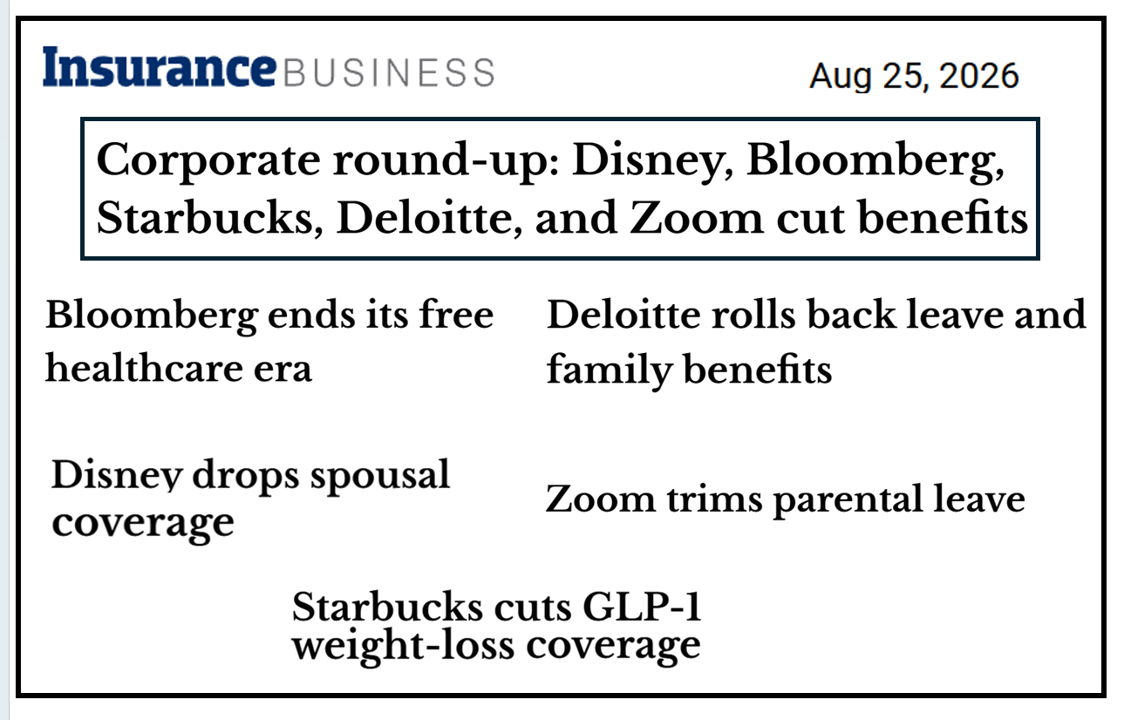
Bloomberg, Deloitte, Disney, Starbucks, and Zoom all announced plans to cut health care benefits looking toward 2027 business plans. Whether this is a blip in the 80+ year old story of the unique employer-sponsored health care market in America or the beginning of a long end-game for U.S. health insurance at the workplace remains to be seen. But the forecasts of near-double-digit health premium increases employers will confront in 2027 are potent, forcing companies to, at least, re-visit and alter health benefit designs to surgically target specific cost-increasing categories — such as GLP-1 medicines and behavioral health benefits, along with much-valued coverage such as parental leave and financial advice. Note that for some smaller employers, health benefit cost increases could exceed 14% (more details on that below), a space to watch in terms of benefit cuts and eroding levels of coverage. Here is the line chart from the annual Mercer National Survey of Employer Sponsored Health Plans, showing year-on-year cost growth since 2022. Mercer’s rate-of-increase forecast is in the ballpark of other recent projections we’ve been collecting, from Aon (at 9.5%), the Business Group on Health (at 9.2%), the International Foundation of Employee Benefit Plans (at 10%), PwC (at 9%), and Willis Towers Watson (WTW) with an 11.1% estimate for 2027. The zenith for health premium cost increases was back in 2003, circled here in a chart clipped from Mercer’s previous iteration of the Employer Benefit Survey. Double-digit premium increases were a feature of annual health benefit planning at that time, where pioneering efforts for value-based care began to emerge in benefit plan designs. It’s interesting to see that inflation (CPI) was hovering lower than health benefit cost changes every year, which in 2026-27 helps put in perspective as inflation in the U.S. continues to be sticky upward based on the price of petrol/gasoline, food, and certain categories of goods subject to tariffs. It’s also important to add context to employer-sponsored health care costs looking at how small businesses are facing even higher growth rates to provide health care to workers. The Peterson-Kaiser Family Foundation (KFF) researchers examined the small group market filings for Affordable Care Act-compliant plans in the small group market — defined as companies with 50 or fewer full-time employees, reporting these results out in an August 2026 study. Health plan premium increases in the small employer group market are expected to grow even faster in 2027 compared with larger employers providing health insurance — with a median rise of 14% and other employers facing even higher cost spikes. This median rate could be even higher for many small companies: of the 295 plans studied, 95 were facing increased rate changes of 15% to 20%, as shown in the bar chart. Health Populi’s Hot Points: There are many reasons offered by the various employee benefits firms to explain the much-higher cost of increases for health benefits in 2027. Among these, the following fall on a plurality of firms’ lists of prominent cost-drivers (or inflaters): in no particular order, The growing prescribing and use of GLP-1 medicines to deal with diabetes, weight loss and obesity — along with other specialty drugs driving pharmacy expenses up Higher hospital costs, underpinned by consolidation (hospital mergers) in local and regional markets which reduce the level of competition in those communities, allowing institutions to charge higher prices for inpatient and outpatient services Lower public sector reimbursements for public health programs (Medicare, Medicaid, others) which pressure privately provided commercial insurance plans Hospitals and other providers allocating more financing to invest in information technology — namely, AI tools and services to address both financial/administrative workflows along with clinical software. As U.S. families continue to struggle with affordability for kitchen table line items, from mortgages and housing to utilities, the cost of transportation (say, driving to work), and food to feed families, health care costs can crowd out other spending — or, be avoided so consumers can pay for necessities in daily life and living. Watch for employers providing health insurance at the workplace to levy additional out-of-pocket spending onto workers and their families, along with shifting health and other benefits off of the benefits menu. Affordability challenges face U.S. families in record numbers in 2026, and these worker health insurance forecasts bode ill for improving that health care cost line item in families’ budgets for 2027. The post In 2027, Employers Will Face the Highest Health Benefit Cost Increases Since 2003 – Is This the Beginning of Workplace Health Erosion? appeared first on HealthPopuli.com.
- When the Cost of Food is a Health Risk: Dollar Stores, Tariffs, Family Meals, and the Rising Cost of Food
 by Jane Sarasohn-Kahn on 28.08.2026 at 15:39
“Shoppers are feeling less control of their spending on food and more concerned about food prices than in February 2026.” Researchers with The Food Industry Association discussed their latest research into U.S. consumers’ worries about food prices’ impacts on family meals this week, and their findings comport with what I see happening in peoples’ self-care choices at-home directly impacting nutrition as well as adjacent areas of retail health and home health life-flows. This data point meshes with trends in geopolitics, home economics, and consumers’ growing demand for self-care outside of traditional “front doors” compelling me to call-out the health risks accompanying the high and higher costs of food. Start with geopolitics, which this week prompt me to focus on President Trump’s latest call for tariffs on Canada. Follow this announcement the IFPA immediately warned its stakeholders — the largest international association serving the entire fresh produce and floral supply chain — that, “The implementation of new tariffs on Canadian goods adds to the uncertainty facing the agriculture industry operating across the highly integrated North American market. Last year, Canada accounted for?48 percent of U.S. fresh produce exports, over $3.5 billion in produce sales. In total, the United States and Canada share nearly $6.5 billion in annual fresh produce trade. Canada is also a major supplier of cut florals and floral inputs, as well as an important source of critical inputs that U.S. fruit and vegetable growers rely on. A stable, predictable trade relationship with Canada is essential to the growers, businesses, and consumers who depend on a strong North American fresh produce supply chain.” With consumers’ growing taste for food-as-medicine and mindful food choices for medical goals, a research paper in BMC Public Health struck me this week bolstering my thinking of food as a social determinant of health (or driver of health). Titled, “Beyond proximity: how food quality in dollar and grocery stores influences health,” the researchers found that folks who buy food from dollar stores were at greater risk of poorer health outcomes. In UC Riverside’s coverage on the university researchers’ study, Jules Bernstein wrote, “While consumers may save a few bucks on groceries at dollar stores, they end up paying a higher price with their health. New UC Riverside research shows a link between dollar store food quality and higher rates of obesity, high blood pressure, cholesterol, and type 2 diabetes.” The graphic summarizes the study results. Ryan Bruellman, UCR genetics, genomics, and bioinformatics doctoral candidate and the study’s first author, explained his motivation to do this study: ““I want to raise awareness that higher grocery costs are pushing people to buy highly processed, lower quality food at dollar stores, and it is negatively impacting their health in a similar way to fast food.” Ryan and his colleagues used data from the Centers for Disease Control’s 500 Cities Project which has gathered data across U.S. communities. They included a cohort of dollar stores including the 99 Cent Store, Dollar General, Dollar Tree, and Family Dollar which together represent about 34,000 storefronts. Furthermore, Ryan noted that, “Across the U.S. there are more dollar stores than traditional grocery stores.” While this hypothesis might be intuitive to a lot of people, having this hard data is important and should inform public policy from the Federal level to local public school departments. Here’s the USDA’s latest data on rising food prices by product category at the grocery store and away from home in restaurants. The price of food increased by 3 percentage points from June 2025 to June 2026, with higher inflation for beef and veal (11.8%), fresh fish and seafood (6.3%), and certain kinds of fresh produce (for example, fresh vegetables rising at nearly 10%). Now to the FMI research I cited introducing this post: consider how U.S. adults have reacted to the rising cost of food and their control over expenditures. ‘ FMI’s webinar on Consumer Perspectives on Family Meals, precedes FMI’s Family Meals mission convening Family Meals Month in September. Note the mission spelled out: that “Family meals are the foundation for a healthy nation…The nourishment we get at family meals helps us to be physically and emotionally fit.” Bottom line? “Stay strong with family meals!” FMI enthuses on the poster asking us to Join the Movement. [FYI, I grew up this way as busy as a family we were in my Wonder Bread years, and this stuck with me in our raising our own daughter decades later.] Importantly, FMI’s data and recorded personal responses recorded for their session provides life human commentary on this topic: that families seek togetherness over the meal table but struggle with the cost of food, the cost of transportation, and the cost of time to/from workplaces. Health Populi’s Hot Points: PwC’s Voice of the Consumer study this year (subtitled “the rise of everyday health”) discussed the food and beverage industry’s role in serving up healthy choices for mainstream people who are dealing with the high costs of health care and the high costs of healthy food. In this diagram from the PwC report, we can learn about opportunities for the Food+Bev industry, illustrating areas consumers demand products and services from these stakeholders — including meal and nutrition support, help with sleep and stress relief, and products that can help us feel and look better, from head to toe and from internal cells to external skin. Keep keeping in mind FMI’s finding that people are seeking more control in the midst of rising costs: this ethos impacts consumers across all age groups (in different ways), income and education levels, across political party ID, and race and ethnicity identities. When we in the health/care ecosystem talk about and venture to “meet people where they are,” this phenomenon of self-control and agency vis-a-vis rising costs of living is now part of where people are, every single day. The post When the Cost of Food is a Health Risk: Dollar Stores, Tariffs, Family Meals, and the Rising Cost of Food appeared first on HealthPopuli.com.
- A Bullish Market for Wearables and the Health-Driven Consumer
 by Jane Sarasohn-Kahn on 19.08.2026 at 13:51
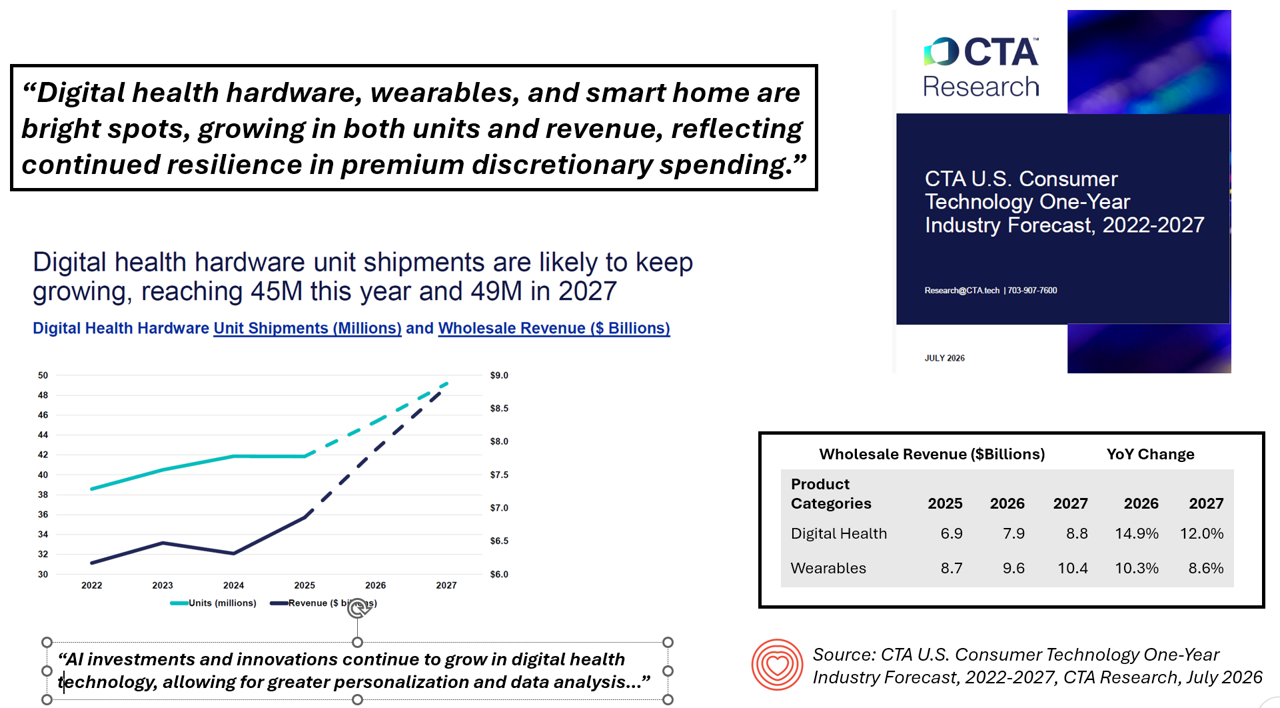
The forecasts for wearable tech for health range from a state of “war” innovators to a consumer-led bull market for quantifying selves across a range of measures. There is a growing array of options for health-driven consumers across a spectrum of goals and applications, and varying levels of clinical evidence. In this post, I’ll discuss the current (fast-moving and -morphing) state of the wearable tech-health market, following up with implications for consumers, caregivers, and health citiznes-at-large. Let’s start with the forecast from the Consumer Technology Association (CTA), which held a webinar on their latest annual outlook on consumer-facing devices and tech services. I selected these key data points to share from CTA’s one-year forecast report, the CTA U.S. Consumer Technology One-Year Industry Forecast, 2022-2027 published in July 2026. FYI I provided input into this forecast based on my work in the digital health, smart rings and things, smart homes, and wearable technology segments. As Savannah Littlejohn of CTA mentioned in discussing the forecast for the digital health segment, AI is adding value to consumers’ perceptions of and utility for these innovations (say, remote health monitoring) and wearable tech, bolstering sales optimism. In fact, Digital Health as a CTA category of analysis is among the few areas that expect double-digit growth, with the curve of that growth shown on the graph on the left. The report notes that, “AI investments and innovations continue to grow in digital health technology, allowing for greater personalization and data analysis for users.” There are other bright spots of growth in the CTA forecast relating to consumer-driven health and wellbeing, such as fitness activity bands (e.g., Garmin, Google, and Whoop among them) and smart rings which I’ve noted in the past here on Health Populi are finding relatively strong consumer adoption as a category for folks who still like wearing traditional wrist-worn watches as well as people (like me) doubling up on both a smartwatch and a smart ring for different health applications and goals. Gil Levitan of CTA also noted that some consumers are keen to use smart rings to track and manage sleep, a big objective for many consumers (globally) in and beyond 2026-7. Connected health devices are going beyond glucose monitoring, again a growing category among consumers managing diabetes as well as those seeing greater understanding of metabolic function. Adding to the insights gleaned through the CTA research, I note a plethora of mainstream and trade publications taking deep dives in the wearable and digital health market in just the past few weeks. Here, I’ll point to writings in The New York Times and the Wall Street Journal, along with an informative piece in ATN (Athletech News). “The Cutthroat Wearables Battle Is About More Than Tracking Your Fitness,” Brent Crane wrote in the Deal Book newsletter of The New York Times August 15th, calling out Google, Apple, Samsung, and newer entrants like Oura “racing” to integrate data from wearable tech into the health care system. As you can read in this sidebar from Brent’s fantastic assessment, his forecast goes into the future to 2035, imagining we are armed and embedded with sensors generating data that feeds into an AI-powered system. This is the sort of personalization that the CTA forecast talked about. While Brent recognizes that, “Full-on health care integration is still in utero,” he also smartly notes that, “Health care is where the real money lies.” Thus the title of this excellent analysis cites “the cutthroat wearables battle,” with companies innovating and positioning to meet the increasingly integrating health care data ecosystem….again, underpinned and accelerated through smart use of AI. Moving from “healthmaxxing,” we move to “datamaxxing:” similarly in the Wall Street Journal on August 11, Tina Li and Natalie Kaufman discuss “The Datamaxxers Feeding Their Every Health Move to AI,” discussing the consumer-driven side of the digital health-wearable marketspace. Meet Mika Reyes, whom Tina and Natalie introduce us to, featured in their column. Mika is a “datamaxxer,” preparing to run and optimize performance through gathering personal data from several devices, including a Garmin watch, an Oura ring, and the popular Strava app. The authors write that, “Health obsessives often monitor workouts, step counts, sleep metrics, heart rates and nutrition data, cross-referencing the information with their calendars, meeting transcriptions, emails and clinical records. Now, they are supercharging their habits with AI systems that serve as hyperpersonalized health trainers and assistants. While fretting over such minutiae is far from mainstream practice—many doctors recommend simplicity in fitness and nutrition—a growing number of so-called datamaxxers have finally found their version of nerd Valhalla.” Health Populi’s Hot Points: I’ve been part of the digital health community since the advent of the Internet in health care, as my career has tracked the evolution pretty much from the start. I’ll amend Tina and Natalie’s observation on datamaxxers finding “nerd Valhalla” by my own observation and work that these trends are mainstreaming to Main Street, not just to Quantified-Self-Land. The CTA data and annual CES show in Las Vegas, which I’ve attended for nearly 20 years, has demonstrated growing square feet in exhibition halls there and content driving out past the Digital Health Summit onto main stages throughout the event — crossing over into media, gaming, kitchen technology, and last year a growing scene on equity (here on Health Populi translating to “health equity”). Adding in the market analysis published in ATN, I liked this take and table from Courtney Rehfeldt on the market situation, “Fitness & Wellness Startups Have Raised $3.6B This Year – but Not Everyone’s a Winner.” Here are examples of companies in the digital health, connected health, and wearable tech for health space funded in the first half of 2026. You don’t know many of these names yet, but eventually some will show up on the shelves of Target and Walmart’s fitness areas along with Amazon’s expanding marketplace for digital health. What’s driving consumers’ adoption of these technologies are growing senses of financial stress at home across all spending — including health care and medical bills competing with kitchen table issues of food (security and access), energy (at home utilities and running an auto), and housing. In the deepest COVID-era, more consumers repurposes home and hearth into health hubs, people added fitness spaces to their homes, and more added Internet-of-Things for health devices at home — again, “things” featured at CES and other health conferences. While the supply-side of this may be cutthroat, consumers’ growing demand and taste for self-care and control will continue to accelerate across ages and stages of life — for those people who have access to discretionary income. I’ll watch this space for new models of access from vendors and health systems who could bundle tech and services as part of holistic health plans either direct-to-patient and -consumer or through employers and health plan sponsors. Postscript, 19 August 5 pm ET – Check out Leonard Rinser’s just-in-time write-up on his LinkedIn channel about Google’s evolving approach to integrating personal health data, built on the Fitbit chassis. The post A Bullish Market for Wearables and the Health-Driven Consumer appeared first on HealthPopuli.com.